

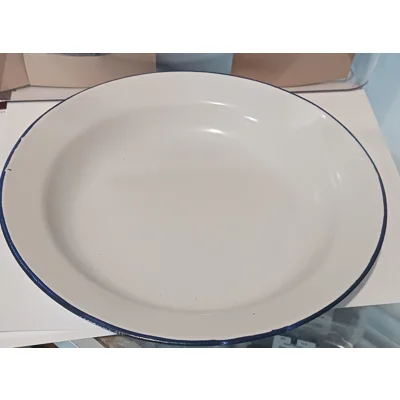

Lrg White Enamel Spirit Plate
An assiette blanche (white plate) in Haitian Vodou is a sacred ritual tool symbolizing purity, peace, and universal spiritual connection, used universally across different Lwa (spirits) to serve food offerings, hold ritual wicks, or anchor petitions.Spiritual Role and SignificanceUniversal Purity: The clean white color represents absolute calm, spiritual clarity, and a clean slate, making the white plate acceptable for nearly any mystery (lwa) without causing energetic clashes.Offerings and Feeding: Practitioners use the plate to present food, dry goods, or ritual items directly to the spirits during devotions.Illumination Work: It frequently serves as the base for an iliminasyon (illumination), where handcrafted cotton wicks soaked in oil and honey are placed inside and lit to bring divine light and spiritual favor
Material: Typically traditional white enamelware with a simple colored rim (often blue or black) or plain white ceramic.Placement: Kept clean and set upon the home altar (pe or ogantwa) or used directly on the ground during floor-level rites
The Enamelware Connection: While modern ceramic is sometimes used, the traditional choice is white metal enamelware (often featuring a simple blue or black rim). Historically, this durable, inexpensive enamelware was standard in Haitian households. Over generations, it became elevated to a sacred object, used specifically to recall the ancestral, agrarian past and honor the lwa with respect.Connection to Ginen: Vodou is fundamentally about serving the spirits of Ginen (the ancestral spiritual home). Using these traditional plates honors the humility, resilience, and customs of the ancestors.Core Ritual UsesThe plate is rarely a passive decoration; it actively hosts spiritual work:The Iliminasyon (Illumination Ceremony): The plate frequently becomes a lanp (lamp). An oungan (priest) or manbo (priestess) takes cotton balls and manually
stretches them into long, thin wicks—strictly avoiding the use of their index fingers during the process. These wicks are placed flat across the asyet blan, soaked in olive oil and honey, and lit. This ceremony creates an intense spiritual heat to attract multiple spirits simultaneously, clear away negative energy, block obstacles, or beg for urgent help.Holding the "Pòt Pawòl" (Spokesperson): In daily or formal devotion, a white plate is placed on the altar to hold a clear glass or white cup filled with water, alongside a white candle. Together, the cup and candle on the plate function as the Pòt Pawòl—the physical "spokesperson" or anchor through which prayers are transmitted to the spirit world.Vèvè Foundations: When drawing a vèvè (the sacred geometric floor symbol used to call a specific spirit), an asyet blan containing cornmeal, wood ash, or coffee grounds is held by the priest. They precisely pinch the dry powder from the plate to trace the lines on the earthen floor of the peristyle (temple)
Why White? (The Rule of Règleman)In Vodou, règleman refers to the cosmic laws, correct protocols, and strict order governing ritual actions. The color white is deeply bound to règleman:Neutralizing Energy Clashes: Spirits belong to different nations (such as the cool, peaceful Rada or the hot, fiery Petro). While a fiery Petro spirit might normally reject a cool Rada vessel, the color white bypasses these divisions. It represents a state of absolute spiritual neutrality and peace, meaning any spirit can safely eat from or interact with a white plate without causing an explosive energetic clash. Damballah and the Clean Altars: White is the mandatory color for the ancient, primordial creator snake spirit, Damballah Wedo. His altars are completely dominated by white fabrics, white candles, and assiettes blanches holding his specific, pristine offerings like uncracked raw white eggs and white flour.
Product Code: SxN4WZF
Brand: Haiti
weight: 4.75 oz
Product Condition: New